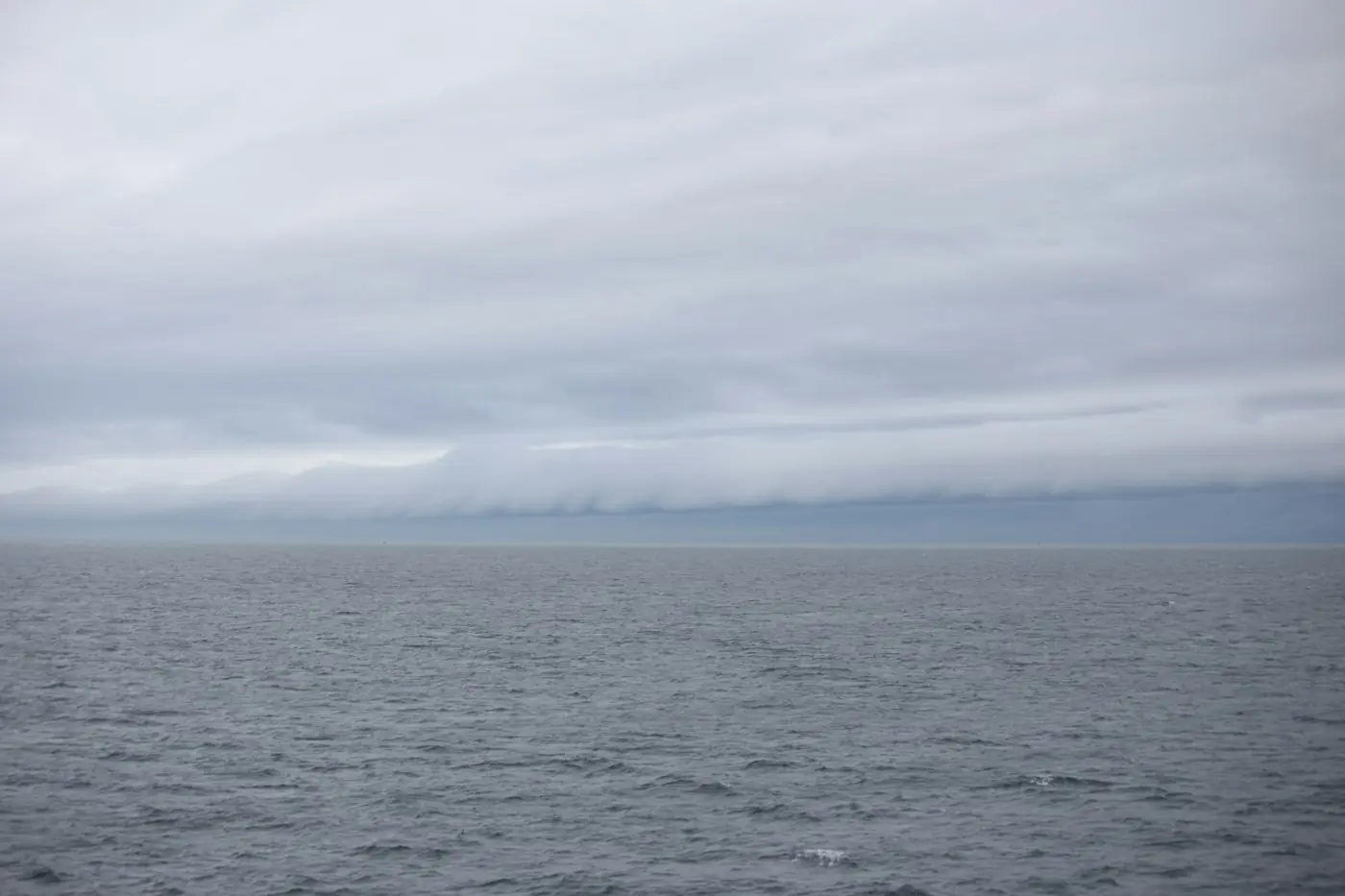
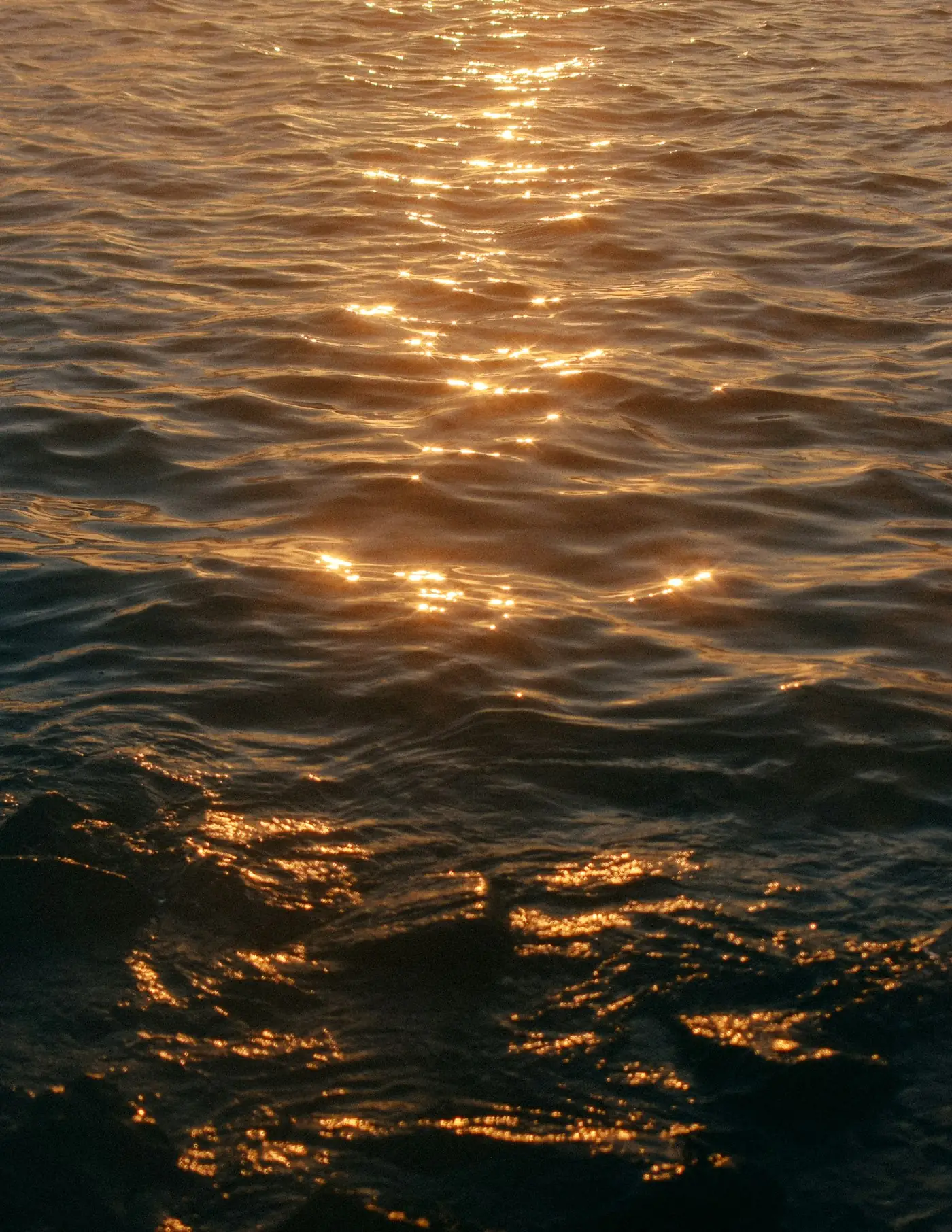
Band 1
Place
Shore and bush in equal measure, with wide sky and small subjects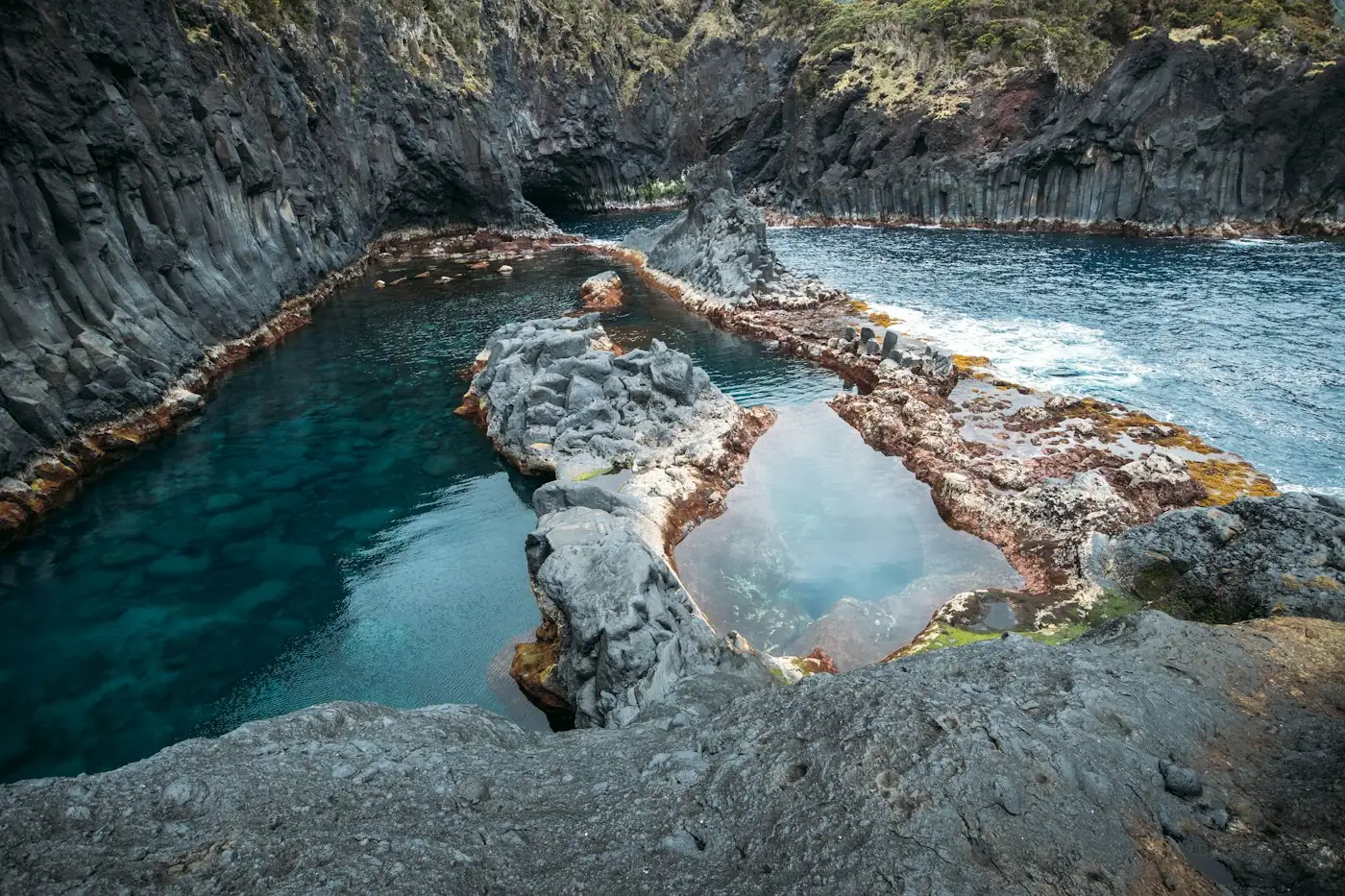
No. 01place · shore
Rock pools at low waterThe edge where the day’s finds wait.Rafael Peier, Unsplash · not Waiheke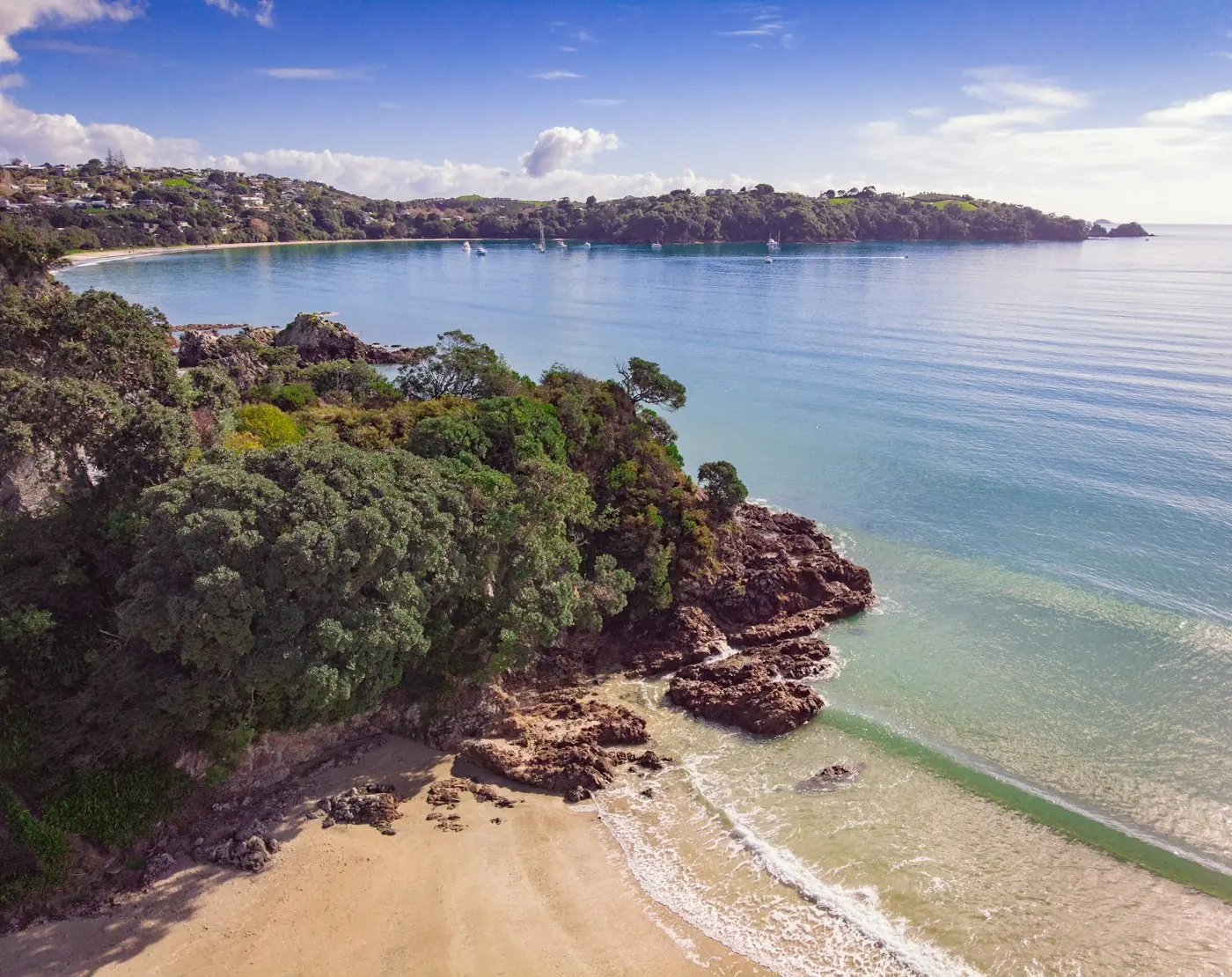
No. 02place · bush meets shore
Where the trees come downBush and beach in one frame, which corrects the board’s coastal bias.Look Up Look Down Photography, Unsplash · appears under “Waiheke Island”, location [unverified]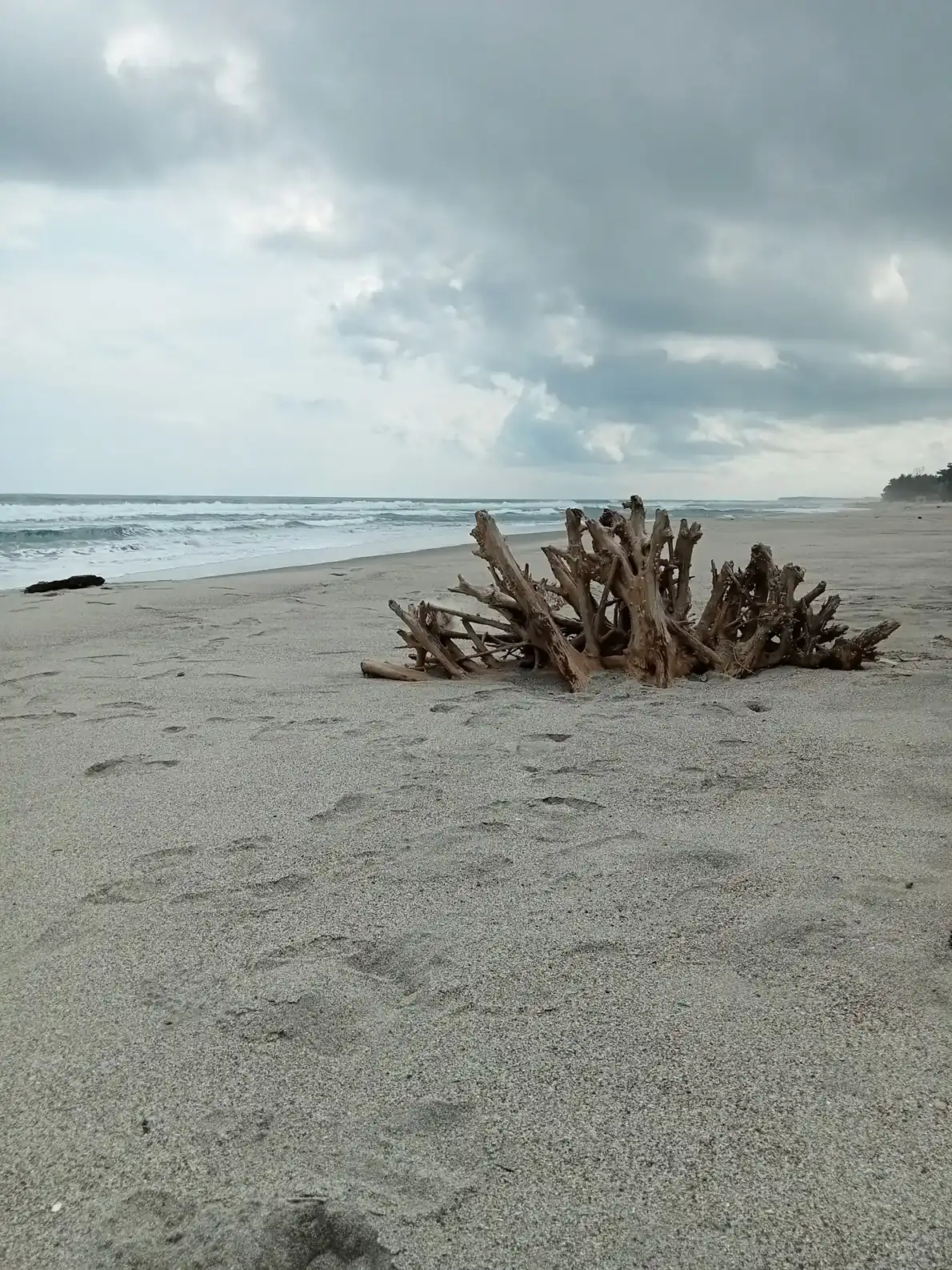
No. 03place · driftwood line
The driftwood lineA grey sky on a pale beach: the line of what the tide left.Hendro Susito, Unsplash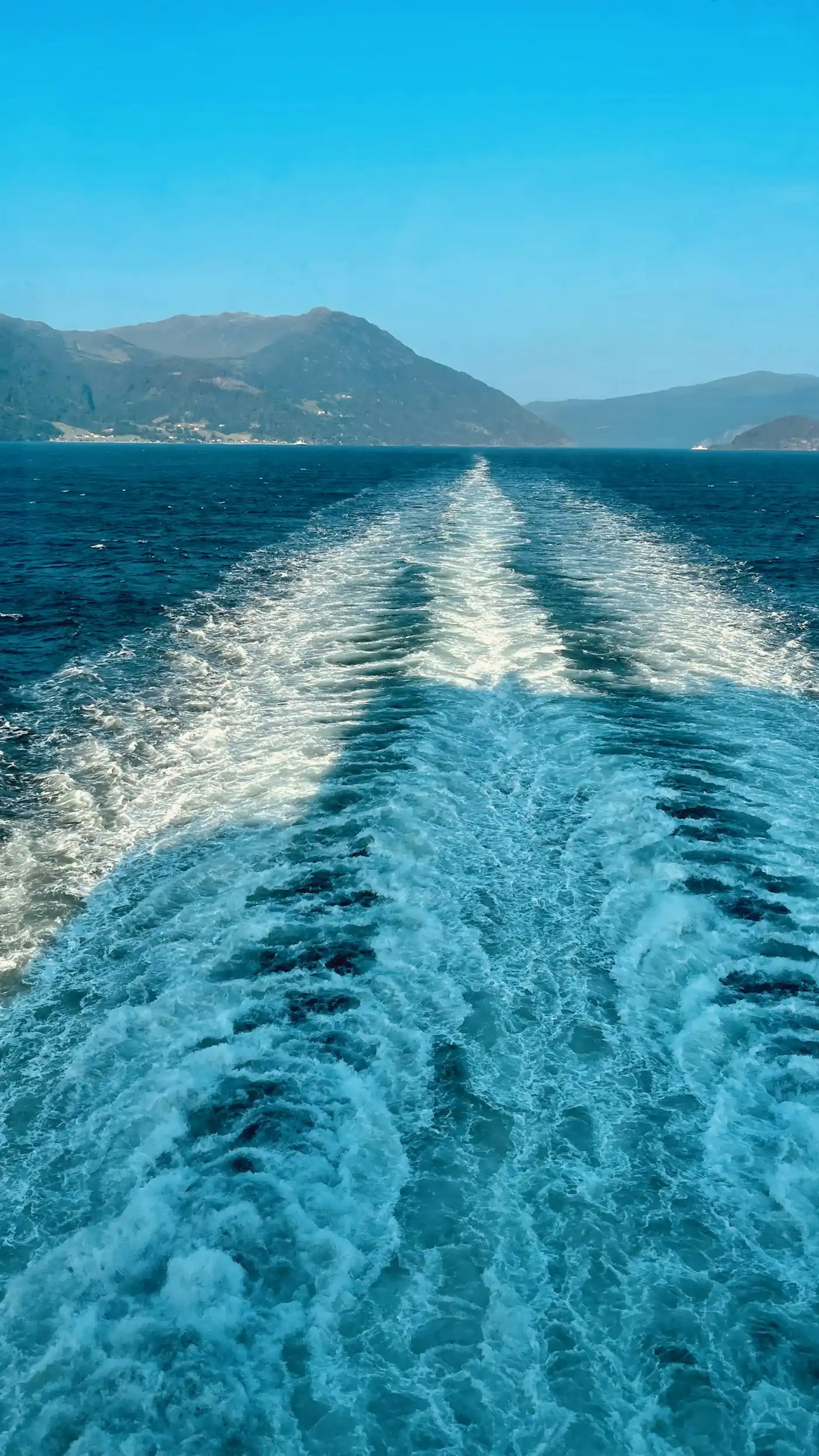
No. 04place · crossing
Ferry wakeOut and back, drawn on the water. For the real shoot, film the crossing to the island at the same angle.Andy Watkins, Unsplash · not the Waiheke ferryBand 2
Hands
Sorting, pressing, drawing: the slow work after finding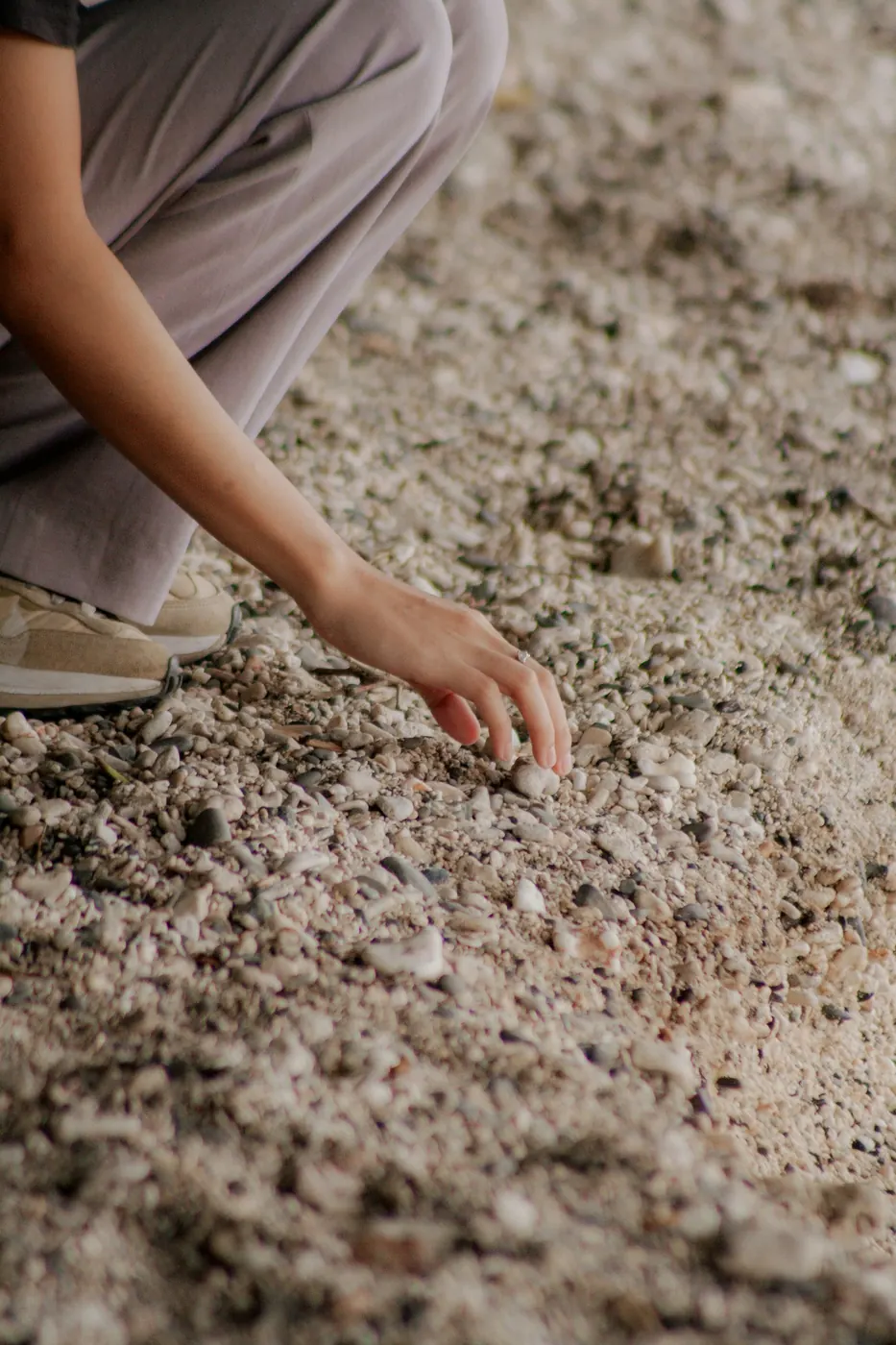
No. 05hands · sorting
Into the gridShot from directly overhead. A child’s hand enters from the bottom right, placing a find into a pencilled 3×3 grid on sand-coloured paper. Flat overcast light, no shadows.Photo: Johan Milson Kamaong, Unsplash · reference for the hand; the pencilled grid is for our commissioned shoot · concept image, not our school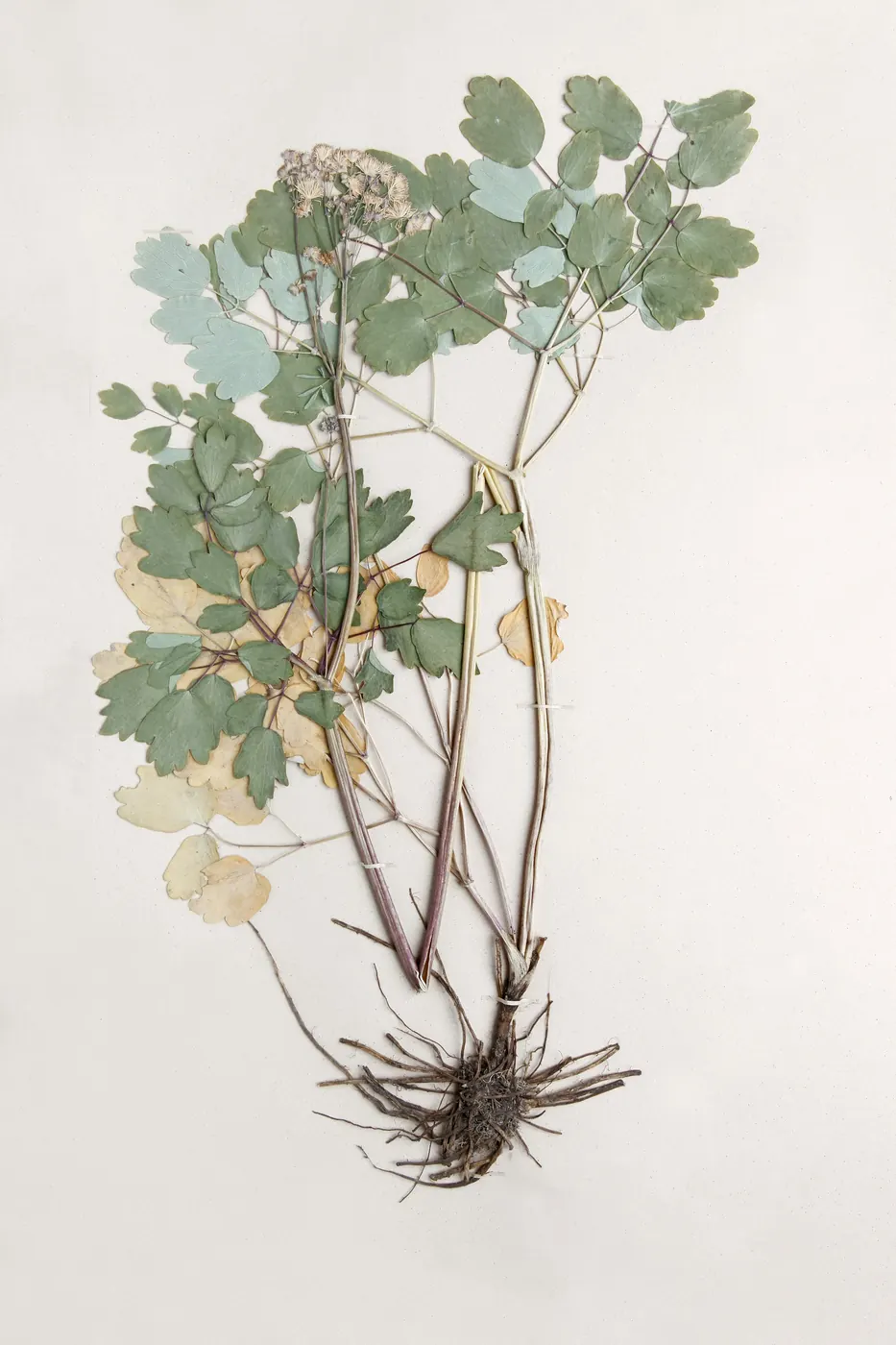
No. 06hands · pressing
Seaweed on herbarium paperA branching red or olive weed is floated onto paper and pressed flat, with a small handwritten label at the foot. The reference is observed form, as in Anna Atkins’s work, not copied. Collect only where the rules allow, or draw it and leave it.Photo: Europeana, Unsplash · a pressed land plant stands in for the seaweed; no label at the foot yet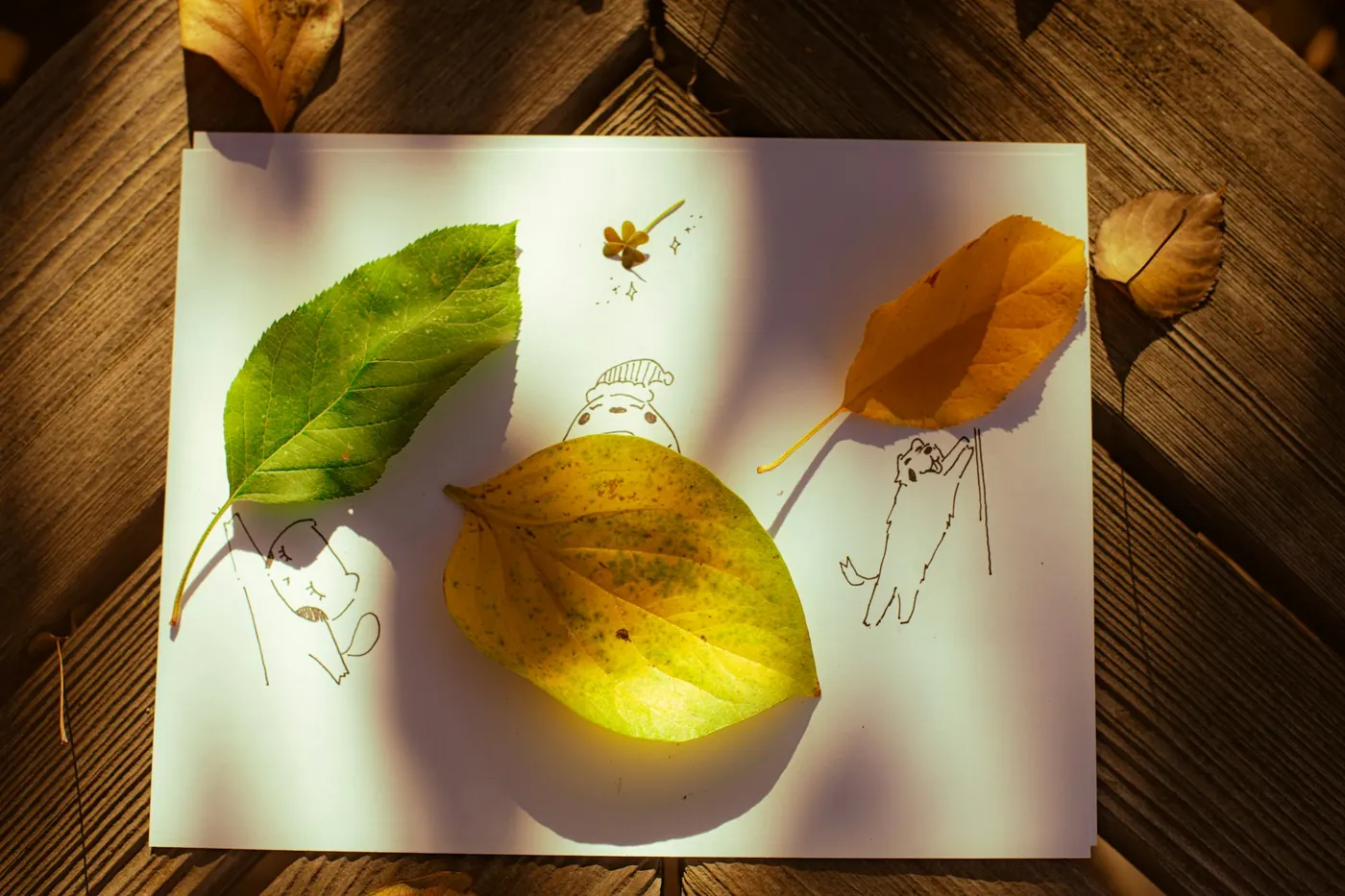
No. 07hands · drawing
Drawing what was foundA notebook open across the table, with the find (a pebble or bivalve shell) on the left page and the child’s pencil drawing of it on the right. Hand and pencil at the edge of the frame, no face.Photo: Madeline Liu, Unsplash · leaves stand in for the pebble or shellBand 3
Children
Small figures in big weather. Concept images stand in here; our own frames wait for written consent.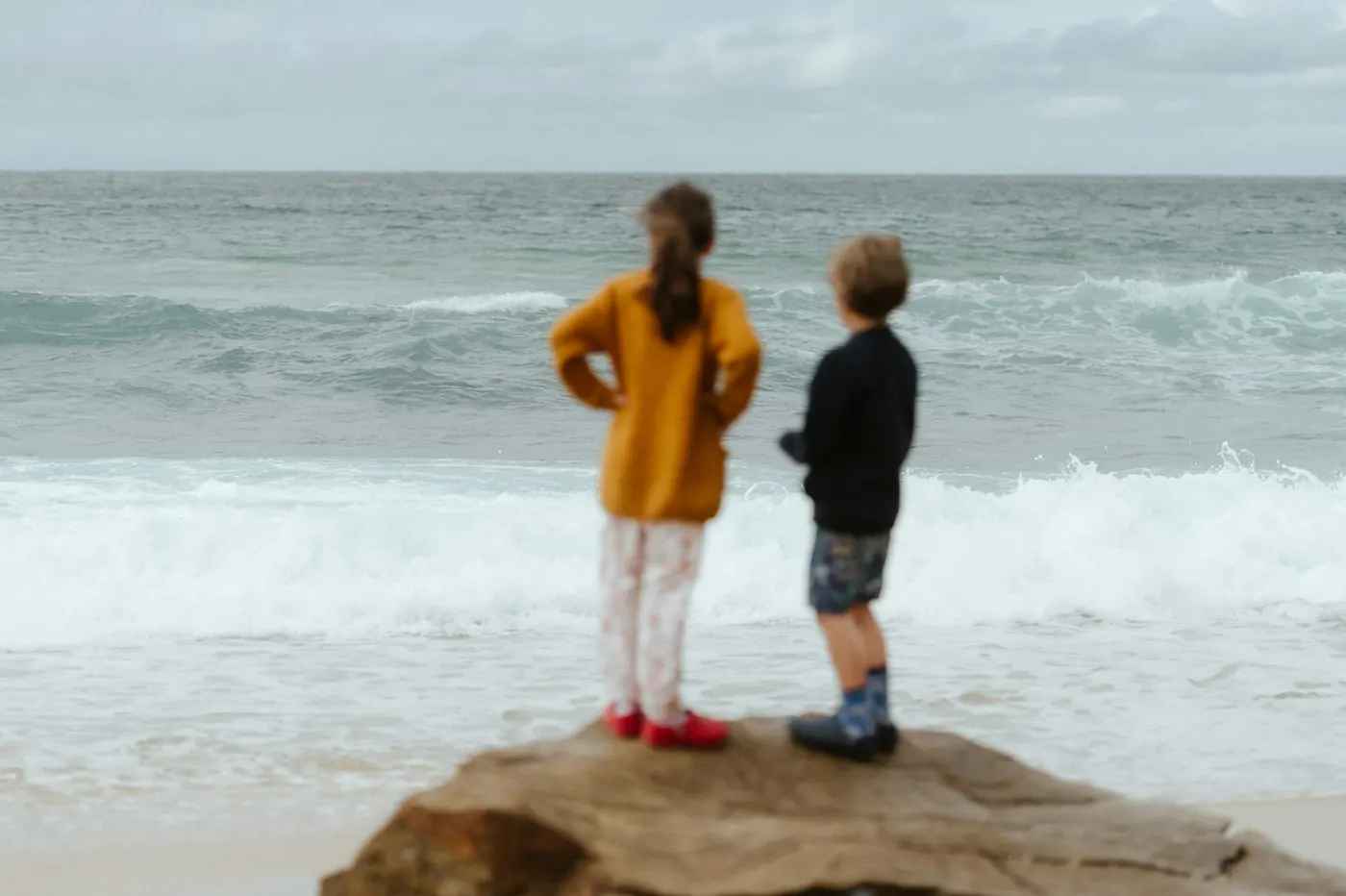
No. 08children · scale
Small against the shoreShot wide on a long lens from 60 m. Three children and one adult in rain jackets (one shell-pink, the rest muted) stand at the water’s edge in drizzle. They take up less than 5% of the frame, and the rest is sky, water and wet sand. Anonymity is built into the scale.Photo: Annie Spratt, Unsplash · closer than our brief; ours is shot wider, figures under 5% of frame · concept image, not our school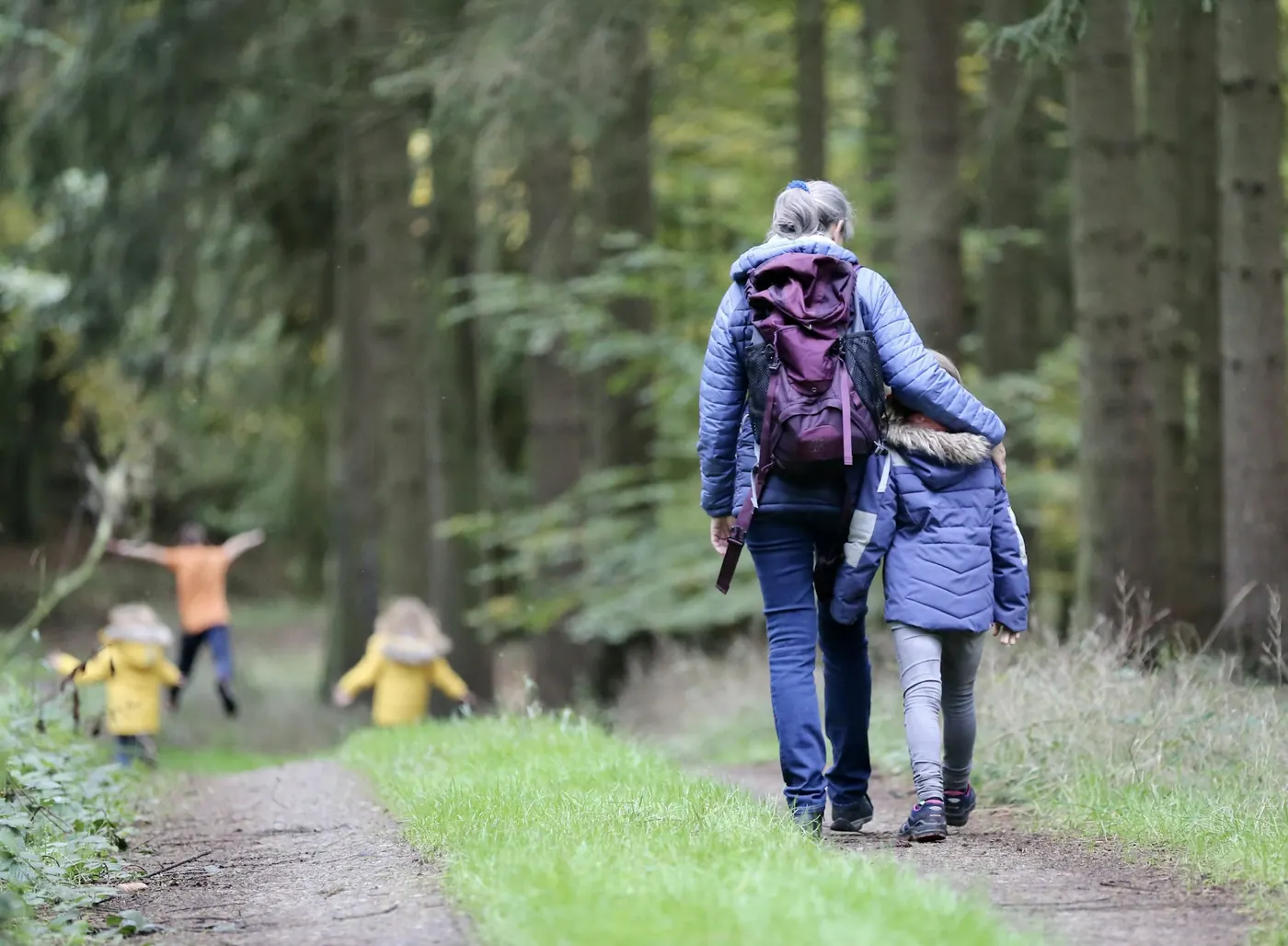
No. 09children · bush
The track inlandFrom a child’s height and from behind, the group heads up a native bush track with collecting bags. This is the same rhythm inland: the board must not read as beach only.Photo: Juliane Liebermann, Unsplash · European forest, not native bush · concept image, not our school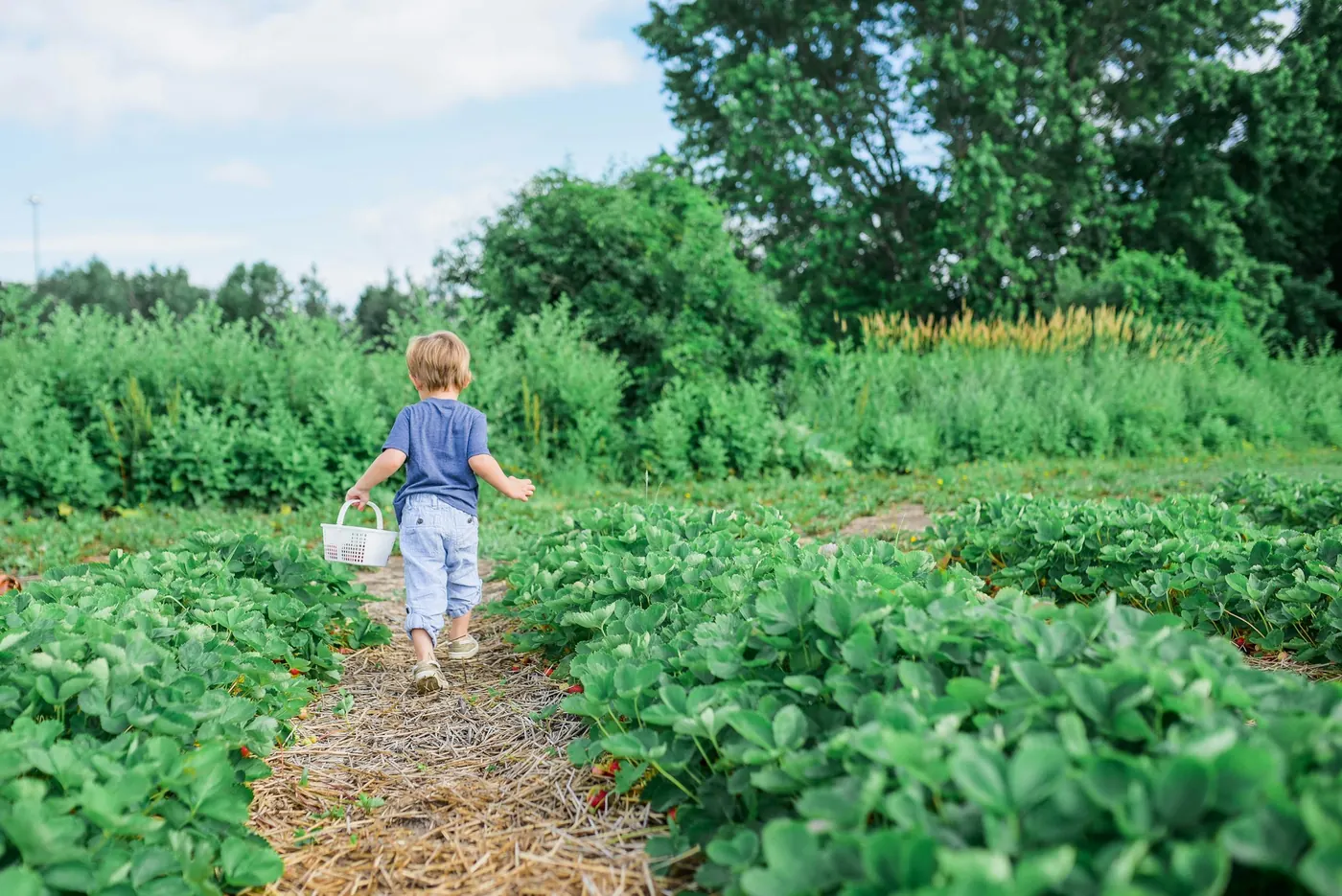
No. 21children · garden
Down the garden rowsThe third place in the rotation. Back to the camera, basket in hand, at a child’s pace: the garden carries the same weight as shore and bush.Photo: Paige Cody, Unsplash · concept image, not our schoolBand 4
Objects
The specimen table: the whole school’s morning, laid out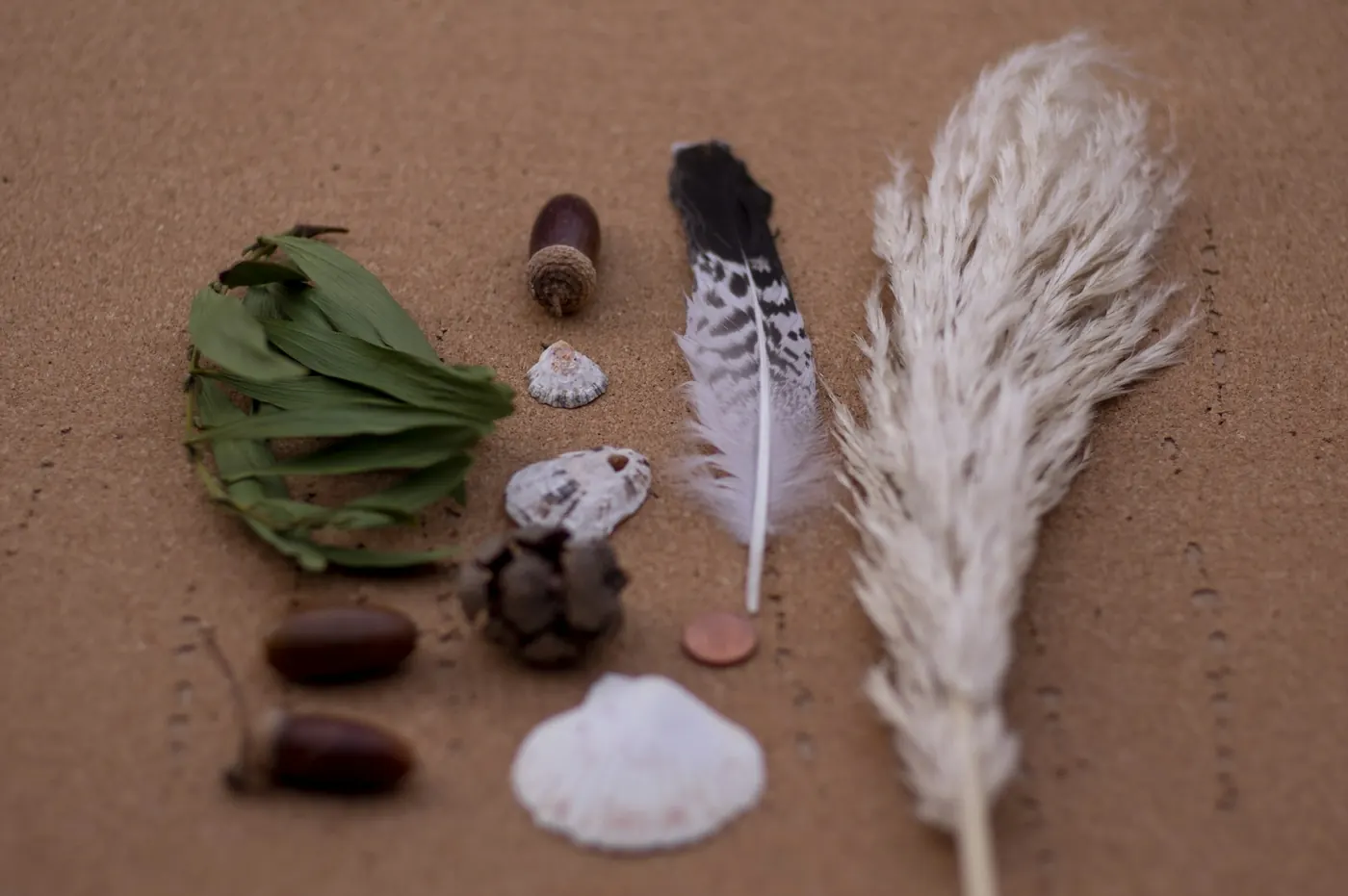
No. 10objects · the table
The specimen gridThis is the main image system. Each week the teacher takes one photograph from above of nine things found or made, labelled like specimens and shot on the same paper and in the same light. Finds and made things carry equal weight. No spiral shells (cultural veto): use bivalves, pods, stones and tools.Photo: Elena Mozhvilo, Unsplash · a row, not yet our 3×3 grid; acorns are not island finds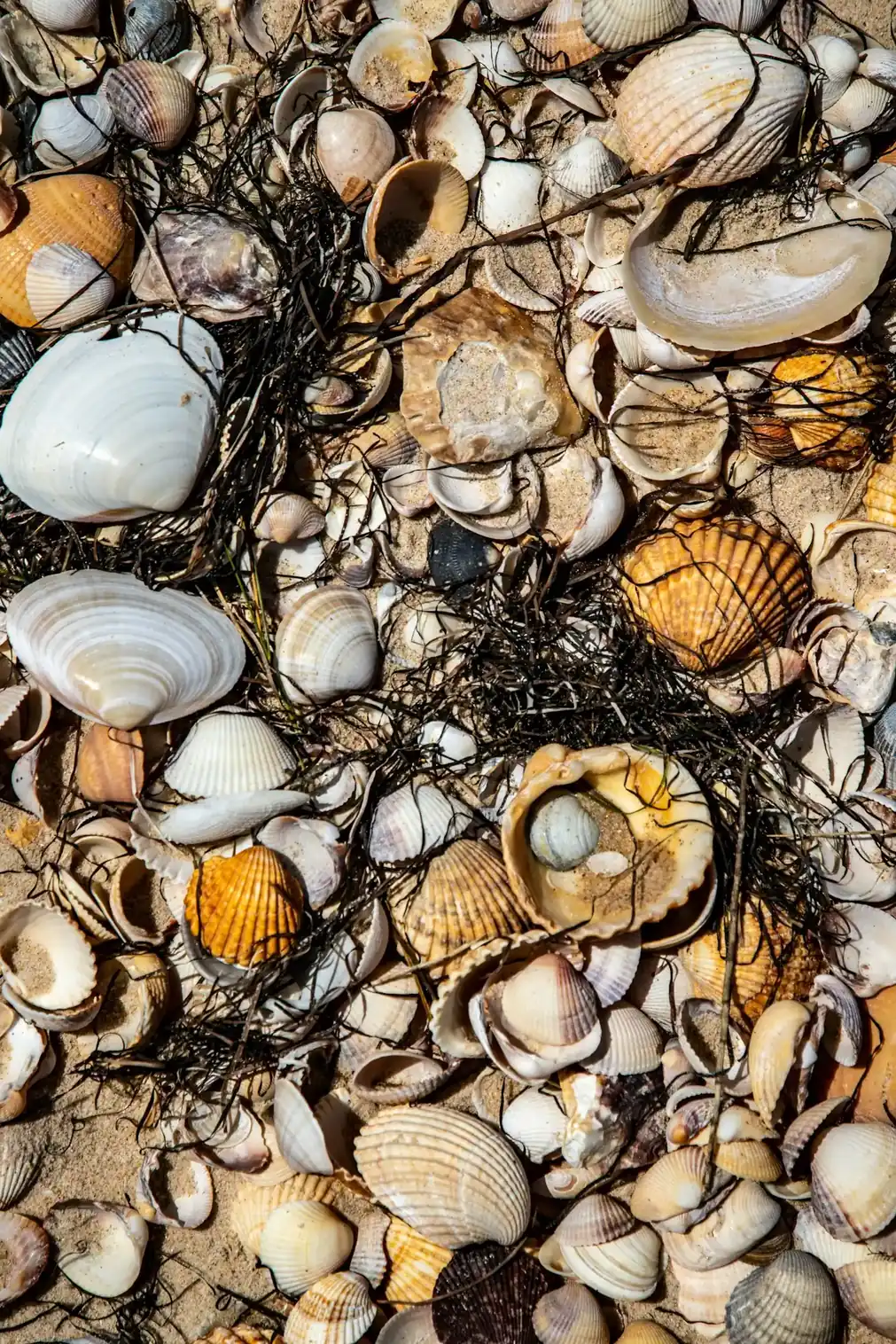
No. 11objects · in situ
The strandline as foundBefore the table, the line itself: weed, shell and grit, left where the water drew it.Bernd Dittrich, Unsplash · art-direct the crop so no spiral shell is the focal pointBand 5
Material & texture
Salt-bleached wood, slate, sand-printed paper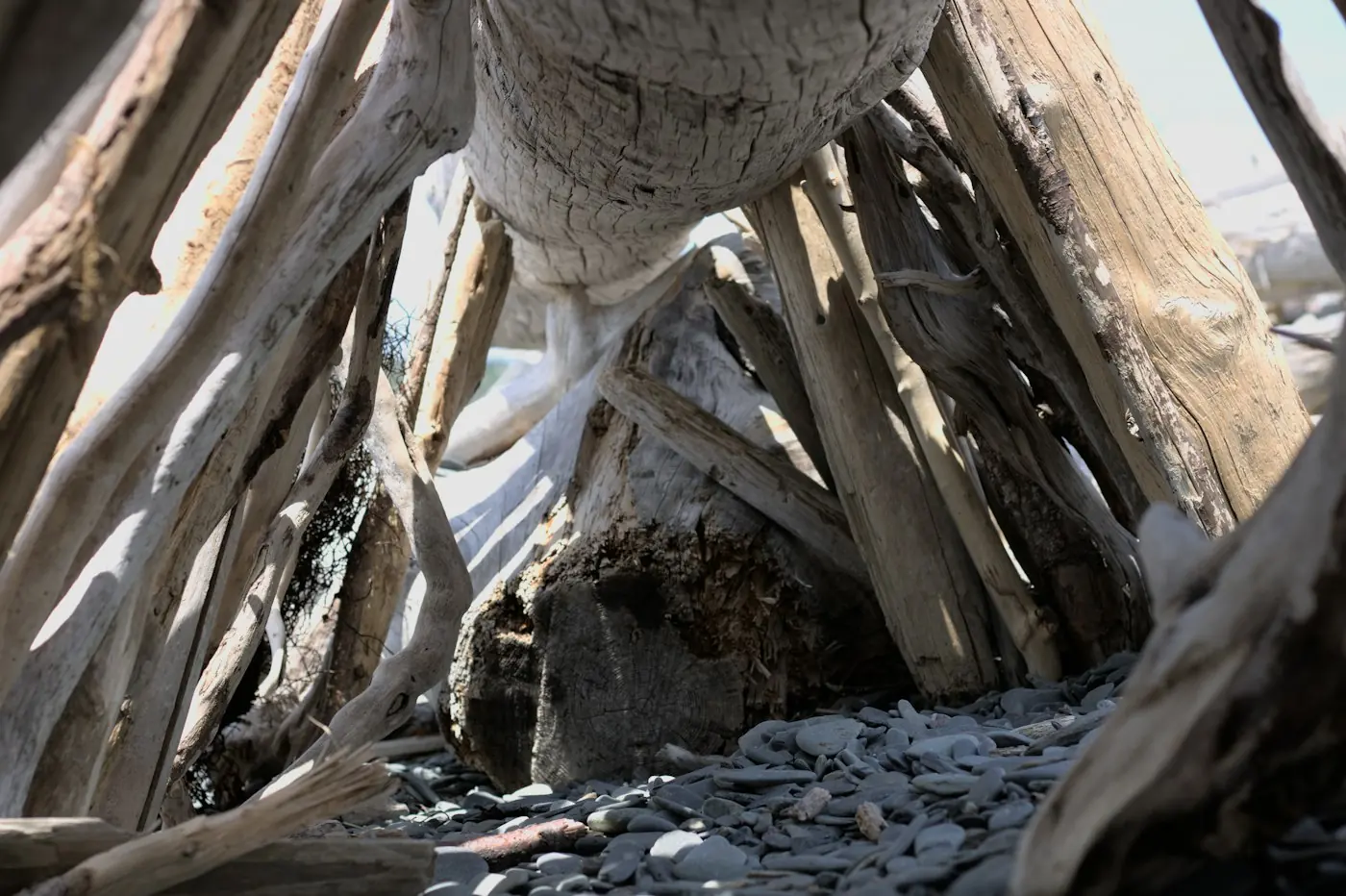
No. 12material · wood
Bleached grainSalt and sun take the colour out of the wood. The Driftwood grey (#A9A196) comes from here.Ty Rethy, Unsplash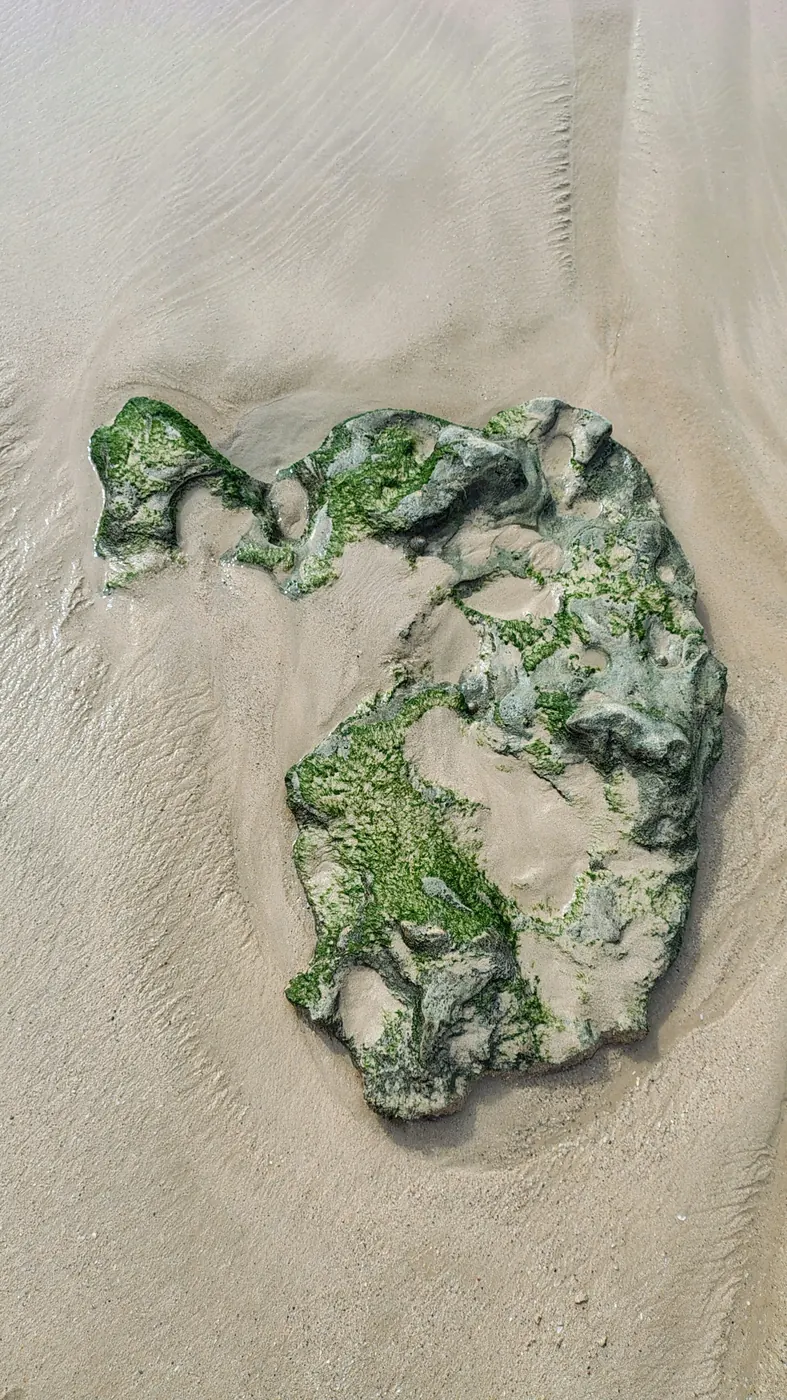
No. 13material · edge
Slate meets sand-printed paperWet slate above and paper below that has been pressed onto damp sand, keeping its grain. Between them is a hard, slightly broken edge. This is the tideline device, made in physical material.Photo: Rishi Saxena, Unsplash · the found version of the edge; slate and paper still to be madeBand 6
Type & print
Tide-table layouts, specimen labels, herbarium pages, single-colour screenprint
specimen · Newsreader Light / Public Sans
What the tide brings.
Out to the bush, the garden and the shore, then back to make something of what we found.
out 9.00amback 12.30pmmade: one drawingline-height 1.5
No. 14type
Type specimenNewsreader Light gives an editorial, precise voice. Tracked Public Sans capitals set the data line. The data line shows the school day, not tide times: real tide data needs an official source [data needed].non-photo frame · Google FontsSand · base#E6D8BF
Slate sea · ink#3E5C64 · ≈5:1
Driftwood · rules#A9A196
Kelp#4F5B3C
Shell pink
No. 15palette
Palette, by depthGrey-blue and sand lead. Kelp is an olive-brown secondary. It is not a green. Shell pink (#E2B9A5) is for accents only, never text.non-photo frameNo. 16device
The tidelineA wavering, broken line, as if pressed by hand, used as divider, frame and baseline. The wordmark’s baseline drifts slightly on purpose. The line is not a wave: it wavers but never curls, so it cannot be mistaken for a surf brand.non-photo frame · inline SVG
open morning · [date]
What the
tide brings.
tide brings.
out 9.00amback 12.30pm[address]
No. 17print
One-colour screenprintSlate ink on sand-toned stock, with slight ink build-up at the edges of the letters. A large top margin and the data line at the foot follow the poster briefnon-photo frame · CSS print simulation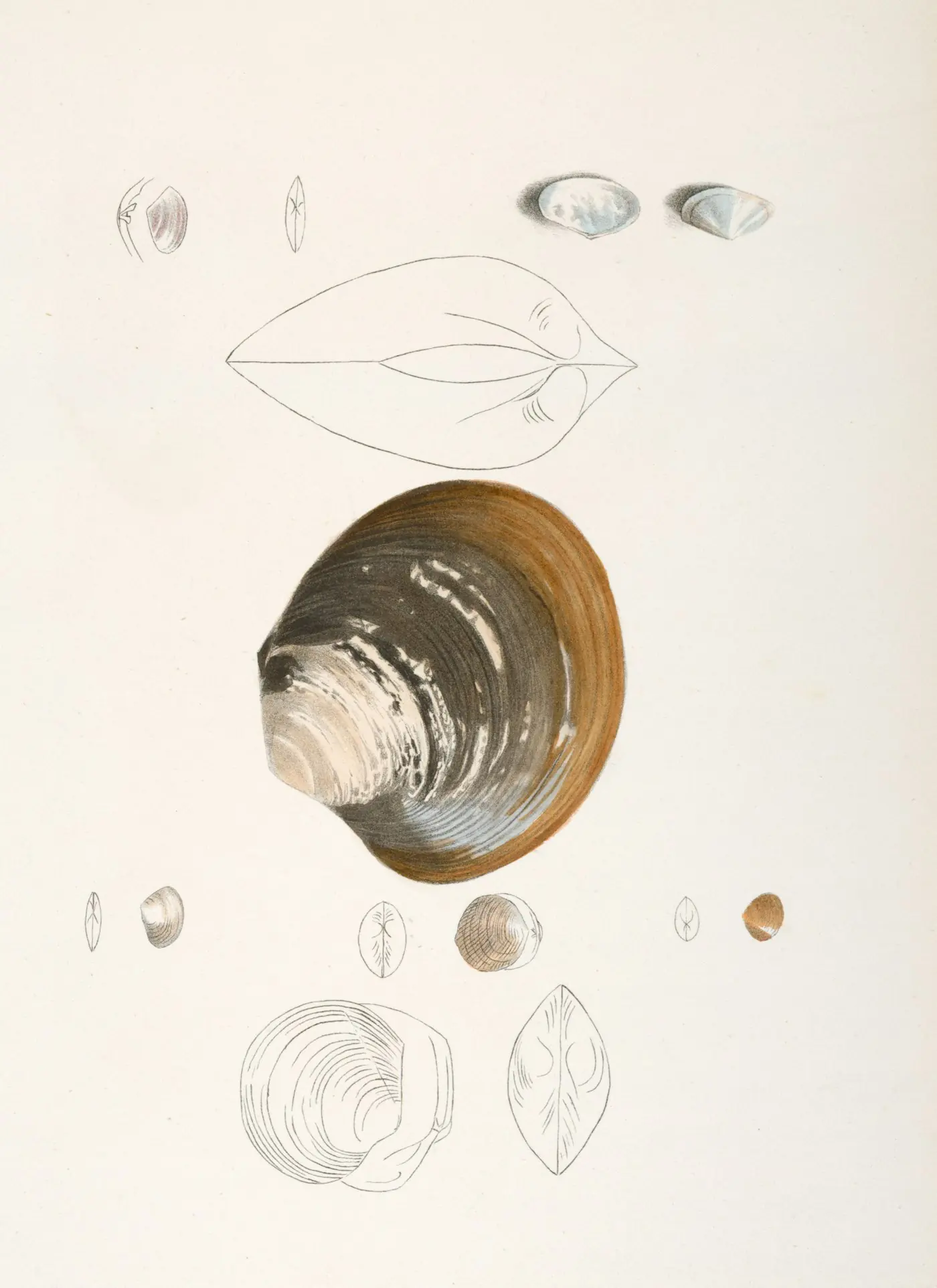
No. 18print · archive
The labelled plateNumbered figures, fine line and a quiet page: the specimen-label logic, centuries old. Use it for reference only, and do not copy it.The New York Public Library, UnsplashBand 7